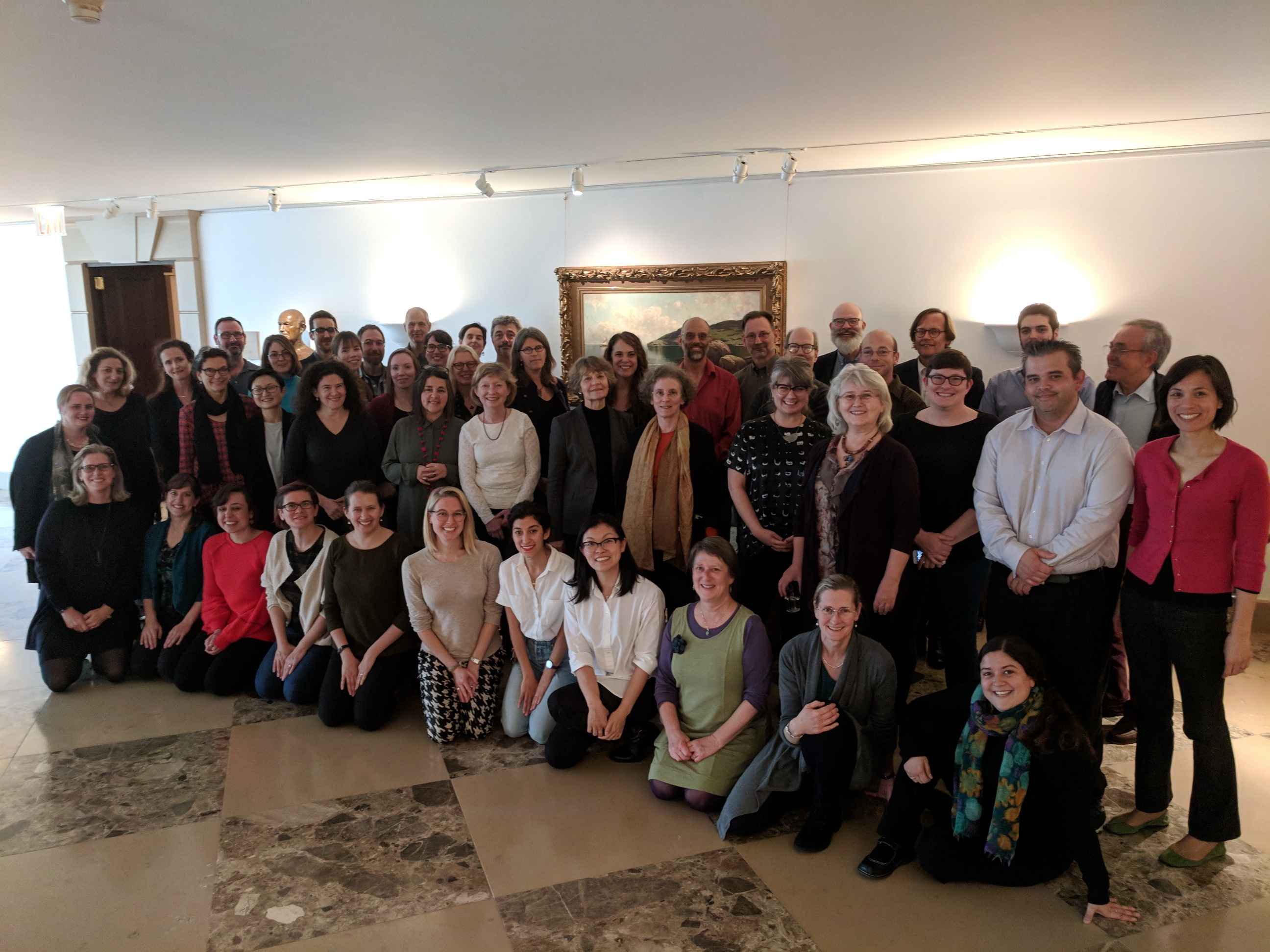
On November 1st and 2nd, over 60 people met for the Materials Selection and Specification Working Group’s second meeting, co-hosted at the American Museum of Natural History and the Metropolitan Museum of Art. Formed in early 2017, the group describes itself as “a community of collection care, conservation, analytical science, and allied professionals united in developing guidelines and best practices for selecting, evaluating, and disseminating materials used in collection care.”
Since its last gathering a year ago, the Materials Working Group (or MWG for short) has identified its short, mid, and long term goals, and identified three subcommittees in order to better achieve its mission. The group has also expanded to include many more individuals.
Along with many others, it was my first time attending the Materials Working Group meeting and I was impressed by the experience and expertise represented in the room as well as by the dedication of its members. Participants hail from art museums, natural history museums, libraries, and private practice, and represent conservators, collection care professionals, conservation scientists, exhibition designers, and vendors.
On the first day, attendants met at the American Museum of Natural History. The day started with presentations from the committee chairs that reviewed the progress of the group to date and its objectives for uniting existing resources (like CAMEO – which is now a WIKI!), directions for research, and means of making new and existing information available to the public. This was followed by member presentations by Rebecca Newberry (Science Museum of Minnesota), Jean Tetreault (Canadian Conservation Institute), Jennifer Herrmann (National Archives and Records Administration), Daniel Burge (Image Permanence Institute), and Caroline Smith (Independent consultant [formerly of Masterpak]) on resources, guidelines, and research related to the evaluation of materials used in collection care.
In the afternoon, participants divided into the three subcommittees - Materials Selection & Specifications; Materials Testing & Standards; Resources & Dissemination - to discuss and outline ways in which to achieve the goals of each subcommittee. I joined the Resources & Dissemination subcommittee, which was a good fit given my interest in outreach. We quickly split up into smaller groups to work on our short term goals: getting the survey to reach a boarder audience, building up the MWG wiki, and creating an accessible resource hub in Zotero.
Attendants met on the second day at the Metropolitan Museum of Art, where we continued to work within our subcommittees. The day began with Rachael Arenstein's talk on the establishment of MuseumPests.net, and was soon followed by the murmur of the many people brainstorming during the break out session. Our huddles were broken by presentations during lunch from Samantha Springer (Portland Art Museum) who presented on the AIC Oddy Test WIKI; Asher Newsome (Museum Conservation Institute) and Fenella France (Library of Congress) who presentated on materials sampling and testing techniques; and Kelly Krish (Image Permanence Institute) and Julie Lauffenburger (Walters Art Museum) who gave presentations on the usage of AD strips.
After lunch, we promptly went back to work! At end of an intense two days of brainstorming and information sharing, participants presented on the status of each subcommittee. This includes (but is by no means limited to) developing controlled terms for use in description and content searching, identifying materials for testing and methodologies, identifying content and structure of the MWG wiki. It was a busy and productive two days during which we made much progress on building this new working group. I'm excited to be a part of it! Anyone interested in getting involved in this working group should reach out to the MWG chair, Becky Kaczkowski.
#AICCCN
#CollectionCare